
Efficient transportation systems make exploring Milan, a city known for its blend of historic charm and contemporary allure, a seamless experience. Understanding the various modes of transportation ensures that you can navigate the city with ease.
Metro:
- Overview: Milan’s metro system is a quick and reliable way to traverse the city. It consists of four lines (M1, M2, M3, and M5) that connect key districts and landmarks.
- Highlights: The iconic Duomo Cathedral is accessible via the M1 line, while the M3 line takes you to the artistic Brera district.
- Ticketing: Purchase tickets at metro stations or use contactless payment methods.
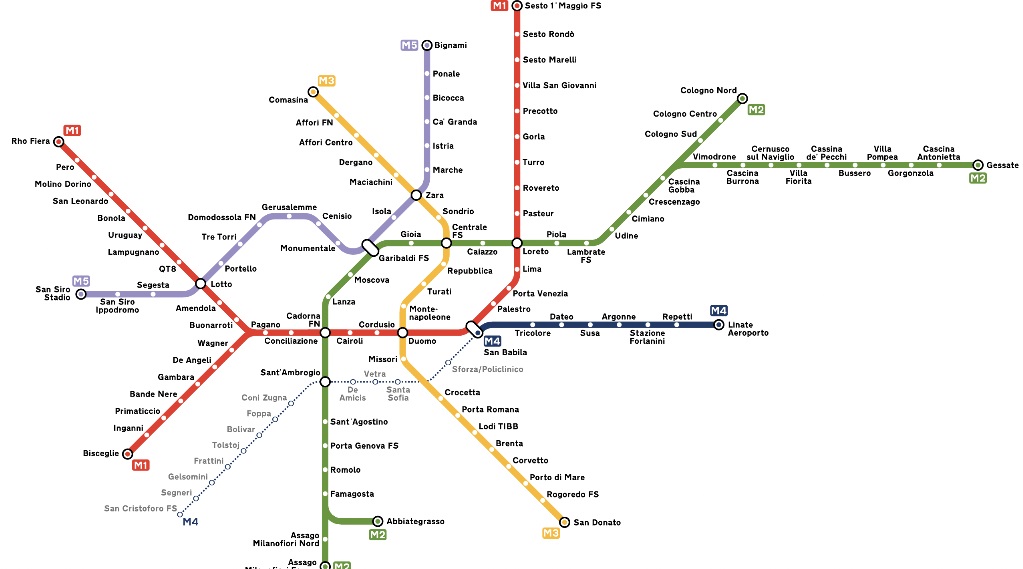
M1 Line:
- Route Highlights: The M1 line runs from the northwest to the southeast, connecting Rho Fiera (ideal for expo centers) to Sesto 1º Maggio. It intersects with major attractions like Cadorna (for Castello Sforzesco) and Duomo (for Milan Cathedral).
M2 Line:
- Route Highlights: The M2 line, traversing from the southwest to the northeast, links Assago Forum to Cologno Nord. Key stops include Cadorna (for Malpensa Express) and Centrale (for Milan Central Station).
M3 Line:
- Route Highlights: M3, stretching from the southwest to the northeast, connects San Donato to Comasina. Notable stops include Duomo (for shopping at Galleria Vittorio Emanuele II) and Centrale (for interchange with other lines).
M5 Line:
- Route Highlights: M5 is the circular line, circling around the city center. It’s particularly convenient for accessing the trendy areas of Brera and Garibaldi. San Siro Stadium is also accessible from this line.
Ticketing and Fares:
- Ticket Types: Single tickets, day passes, and longer-term passes are available. Tickets can be purchased at metro stations, authorized retailers, or through the ATM Milano app.
- Validation: Validate tickets before entering the metro platform at designated machines.
Frequency and Timings:
- Frequency: Trains on the Milan Metro are frequent, with wait times averaging around 2-4 minutes during peak hours.
- Operating Hours: The metro generally operates from early morning until midnight. Check specific line schedules for accurate timings.
Accessibility:
- Accessibility Features: Milan’s metro stations are equipped with elevators and ramps, making it accessible for individuals with mobility challenges.
- Priority Seating: Designated seating areas are available for passengers with special needs.
Interchange Stations:
- Major Interchange Stations: Cadorna, Centrale, and Duomo serve as major interchange stations, allowing passengers to transfer seamlessly between different metro lines.
Tips for Travelers: – Language: While ticket machines and signage often have English translations, learning a few basic Italian phrases can be helpful. – Navigation: Follow color-coded signs and station maps for easy navigation. – Crowds: Be mindful of crowds during peak hours, especially on lines connecting major business and tourist hubs.
Trams and Buses:
- Overview: Milan boasts an extensive network of trams and buses that complement the metro system. These are ideal for reaching areas not directly served by the metro.
- Highlights: Tram line 2 offers a picturesque route through the Navigli district, while bus lines connect suburban neighborhoods.
- Ticketing: Tickets for trams and buses can be purchased at kiosks, metro stations, or via the ATM Milano app.
Bike Sharing:
- Overview: Milan encourages eco-friendly transportation through bike-sharing services. Numerous bike stations are scattered across the city, allowing for convenient short-distance travel.
- Highlights: Explore the city’s parks and canals with a leisurely bike ride. BikeMi is a popular bike-sharing service.
- Access: Register through the BikeMi app or at designated stations.
Taxis:
- Overview: Taxis are readily available throughout Milan, offering a comfortable and convenient option, especially for late-night travel.
- Highlights: Taxis can be hailed on the street or found at designated taxi ranks. They are also accessible through ride-hailing apps.
- Fares: Taxis operate on a metered system, with additional charges for luggage and late-night rides.
Car Rentals:
- Overview: For those preferring the flexibility of a personal vehicle, car rental services are available in Milan. However, it’s important to note that traffic and parking can be challenging in the city center.
- Highlights: Renting a car allows for day trips to nearby attractions such as Lake Como or the Italian Alps.
- Providers: International and local car rental companies operate in Milan.
Walking:
- Overview: Milan’s compact city center is pedestrian-friendly, making walking an enjoyable and popular mode of transportation.
- Highlights: Stroll through the historic Brera district, explore the Galleria Vittorio Emanuele II, and wander around the picturesque Navigli canals.
- Navigation: Most major attractions are within walking distance in the city center.
Airport Connections:
- Overview: Milan has two major airports, Malpensa and Linate, both well-connected to the city center by various transportation options, including buses and trains.
- Highlights: The Malpensa Express train offers a direct link from Malpensa Airport to Milan Central Station.
- Timing: Consider the transportation options based on your arrival or departure airport.