
Getting around New York City can be an adventure in itself, and there are several transportation options to choose from. Here’s a guide on how to navigate the city:
1. Subway:
- The New York City Subway is one of the most efficient and cost-effective ways to get around. It operates 24/7 and covers all five boroughs.
- You can use a MetroCard to pay for subway fares, which also works for buses. Unlimited ride options are available for various durations.
The New York City Metro, commonly referred to as the subway, is the largest and one of the busiest rapid transit systems in the world. It’s an iconic part of the city’s infrastructure, and for most New Yorkers, it’s the lifeline that keeps the city moving. Here’s more information about the New York City Metro:
Extensive Network:
- The subway system consists of over 472 stations and more than 245 miles (394 kilometers) of routes.
- It’s divided into several lines, each represented by a number or letter, including the 1, 2, 3, A, B, C, and so on.
24/7 Operation:
- The New York City Subway is known for its round-the-clock service. Whether it’s the middle of the day or late at night, you can rely on the subway to get you where you need to go.
- However, note that late-night service on some lines may be less frequent.
MetroCard:
- To use the subway, you’ll need a MetroCard, which can be purchased at subway stations.
- MetroCards come in two varieties: Pay-Per-Ride and Unlimited Ride. The Pay-Per-Ride option allows you to load a specific dollar amount onto the card, while the Unlimited Ride option provides unlimited rides during a set period (e.g., 7 days or 30 days).
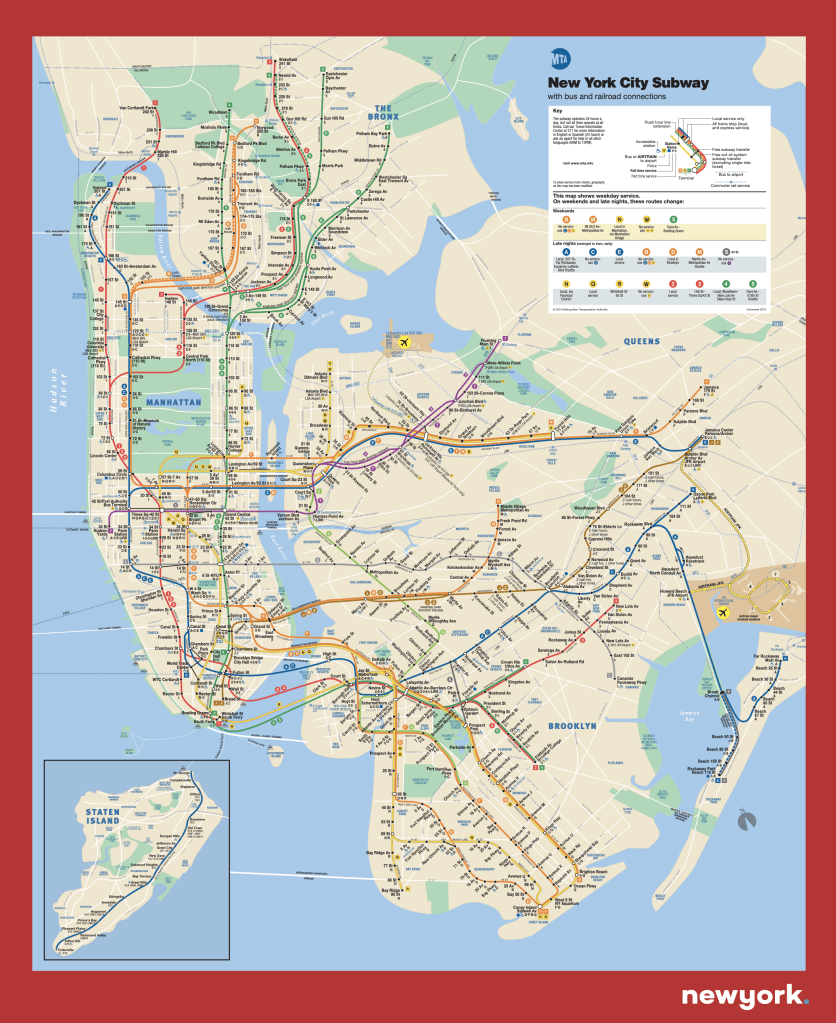
Subway Maps:
- You can find subway maps at all subway stations, and they are also readily available online and on various apps.
- The maps show the routes of each line and help you plan your journey, including transfers.
Transfers:
- Many subway stations allow you to transfer between different lines, which can be extremely useful for getting to your destination.
- Be sure to check the signs for transfer information and follow the guidance provided.
Express and Local Service:
- Some subway lines have both express and local trains. Express trains make fewer stops, which can help you get to your destination faster.
- Local trains stop at every station along their route.
Accessibility:
- While the subway system has been working to improve accessibility, not all stations have elevators or ramps for people with disabilities.
- Check the MTA website for information on accessible stations and alternative routes.
Subway Etiquette:
- When using the subway, be mindful of basic etiquette. Allow passengers to exit the train before boarding, offer your seat to those in need, and keep your belongings close.
Service Alerts:
- The subway system occasionally experiences delays or service changes due to maintenance or incidents. It’s a good idea to check for service alerts before your journey, especially during weekends or late-night travel.
Safety: – New York City’s subway is generally safe, but it’s always essential to be cautious. Stay aware of your surroundings, keep your belongings secure, and use designated areas like the marked waiting areas on platforms.
2. Buses:
- Buses complement the subway system and can take you to areas not served by trains.
- Pay with a MetroCard or exact change in coins. Buses also operate around the clock.
Types of Buses:
- There are various types of buses in the city, including local, limited, and Select Bus Service (SBS) buses.
- Local buses make all local stops, while limited buses skip some stops to provide faster service.
- Select Bus Service (SBS) buses operate on select routes and offer features like off-board fare payment, dedicated bus lanes, and priority at traffic signals for quicker service.
MetroCard Payment:
- Like the subway, buses in New York City accept payment through the MetroCard system.
- You can use an existing MetroCard or purchase a new one at subway stations, bus terminals, or from MetroCard vending machines.
Bus Maps and Routes:
- Bus maps are available at bus stops and online, making it easy to plan your route.
- The official Metropolitan Transportation Authority (MTA) website and mobile apps provide comprehensive information about bus routes and schedules.
Accessibility:
- Many buses in the city are equipped to accommodate passengers with disabilities. They have low floors for easy boarding, designated seating areas, and securements for wheelchairs and mobility devices.
- Bus stops are being made more accessible with features like ramps and shelters.
Real-Time Tracking:
- The MTA provides real-time bus tracking through its website and mobile apps, allowing you to check when the next bus is arriving at your stop.
Service Alerts:
- Bus routes can be affected by traffic, construction, and other factors. Stay informed about service changes, detours, and delays through the MTA’s website and alerts.
Overnight Service:
- New York City offers overnight bus service on several routes, providing essential transportation for those working late or traveling during the night.
Crosstown and Neighborhood Routes:
- Bus routes crisscross Manhattan and connect various neighborhoods. These crosstown buses are particularly useful for getting from the East Side to the West Side, for example.
- Neighborhood routes serve residential areas and provide access to local shops and businesses.
Bus Fares: – The cost of a bus ride with a MetroCard is the same as a subway ride. Fare options include single rides, weekly passes, and monthly passes.
Interborough Buses: – Some buses traverse different boroughs, providing connections between areas of the city. These routes are essential for getting from one borough to another.
3. Taxis:
- Yellow cabs are iconic in New York. They can be hailed on the street or found at designated taxi stands.
- Ridesharing services like Uber and Lyft are also widely available.
4. Biking:
- New York City has a growing network of bike lanes, and CitiBike, a bike-sharing system, is available for short trips.
- Be cautious while biking, as traffic can be heavy.
5. Walking:
- Walking is a fantastic way to explore the city, especially in neighborhoods like Manhattan where many attractions are close together.
- Wear comfortable shoes, and be mindful of pedestrian signals.
6. Ferries:
- Ferries can be a scenic way to travel, especially if you’re heading to Staten Island, Governors Island, or other waterfront destinations.
- The Staten Island Ferry offers free rides with stunning views of the Statue of Liberty and Lower Manhattan.
7. Ride-Sharing Services:
- Uber, Lyft, and other ride-sharing services are readily available in the city and can be convenient for getting around when public transit isn’t ideal.
8. Car Rentals:
- While not recommended for daily city travel due to traffic and limited parking, you might consider renting a car for day trips outside the city.
9. Car Services:
- Car services and private drivers can be booked in advance for airport transfers or special occasions.
10. Long Island Rail Road (LIRR): – If you plan to visit destinations on Long Island or nearby regions, LIRR offers convenient train service.
The Long Island Rail Road (LIRR) is the largest commuter railroad in the United States, and it plays a critical role in connecting New York City to Long Island. Here’s more information about the Long Island Rail Road:
Extensive Network:
- The LIRR operates on a network that spans approximately 700 miles and serves more than 120 stations, connecting Long Island to New York City and other regions in the area.
- The primary terminus in New York City is Penn Station, which is located in Midtown Manhattan.
Commuter Rail Service:
- The LIRR primarily serves as a commuter rail, providing transportation for residents of Long Island who work in Manhattan and other parts of New York City.
- It offers regular and express services during the morning and evening rush hours, making it a popular choice for daily commuters.
Schedules and Fares:
- The LIRR operates on a schedule that is tailored to the needs of commuters, with frequent trains during peak hours.
- Fares vary depending on the distance traveled, time of day, and the type of ticket purchased (peak or off-peak).
Types of Service:
- The LIRR offers various types of service, including local, express, and limited-stop trains.
- The network is divided into several branches, such as the Port Jefferson Branch, Babylon Branch, and Ronkonkoma Branch, each serving different parts of Long Island.
Accessibility:
- The LIRR has made efforts to improve accessibility, with stations equipped with elevators, ramps, and tactile warning strips for passengers with disabilities.
- Some stations offer accessible restrooms and customer assistance areas.
Connections:
- The LIRR connects with other public transit services in the New York metropolitan area, making it easy to transfer to the subway, buses, and other forms of transportation.
- The system provides convenient access to areas like JFK Airport and Citi Field, the home of the New York Mets.
LIRR Tickets:
- Tickets can be purchased at station ticket offices, ticket vending machines, and online through the MTA website.
- LIRR tickets include one-way, round-trip, ten-trip, and monthly options.
Customer Service:
- LIRR staff and customer service representatives are available to assist passengers with ticket purchases, information, and general inquiries.
- Information about schedules and service alerts is available through the LIRR website, mobile apps, and customer service hotlines.
Dining and Amenities:
- Some LIRR trains offer dining cars or onboard food and beverage services.
- Passengers can also enjoy free Wi-Fi on many trains, enhancing the travel experience.
1Scenic Views: – The LIRR provides passengers with scenic views of Long Island, including picturesque waterfronts, small towns, and natural landscapes.
11. Metro-North Railroad: – This commuter rail service connects the city to destinations in Upstate New York and Connecticut.
12. Amtrak: – Amtrak provides train service to cities beyond the immediate metropolitan area, including Boston and Washington, D.C.
13. PATH: – The PATH train connects Manhattan to nearby cities in New Jersey, such as Hoboken and Jersey City.
14. Bus Tours: – Hop-on, hop-off bus tours are popular for tourists. They provide a convenient way to see key attractions while learning about the city’s history.
15. Helicopter Tours: – For a unique and thrilling experience, consider a helicopter tour, which offers breathtaking aerial views of Manhattan.


TOP TRAVEL & FOOD ® team is made of tireless Expert Curators team to reveal “secret spots told by locals” just for you. They search for incredible destinations, dream accommodations, best flavors, memorable events and excellence services, to offer the target audience of readers and partners the greatest coverage and the best achievement of results, using the most modern technologies and expertise in the sector.



All our Review´s standards are covered with the go through careful selection for evaluation,
making a Exclusive selection list that caters to criteria used internationally. Articles and Exclusive Spot Reviews are conceptualized to transmit readers how was each experience with a brand, product or service. We cover the segments related to Tourism, Lifestyle, Gastronomy and Services, besides any others related to the city that we consider relevant for broadcast. We permanently stay connected to the ecosystem of Local Hubs. adding direct value to the Business Market.


 TOP TRAVEL & FOOD MAGAZINE