
Getting around London is convenient and efficient thanks to the city’s extensive public transportation network. Here’s an overview of the various modes of transportation you can use to navigate London:
1. London Underground (Tube):
- The London Underground, commonly referred to as the Tube, is one of the most popular ways to get around London.
- It consists of multiple lines and stations that cover the entire city, connecting neighborhoods, landmarks, and attractions.
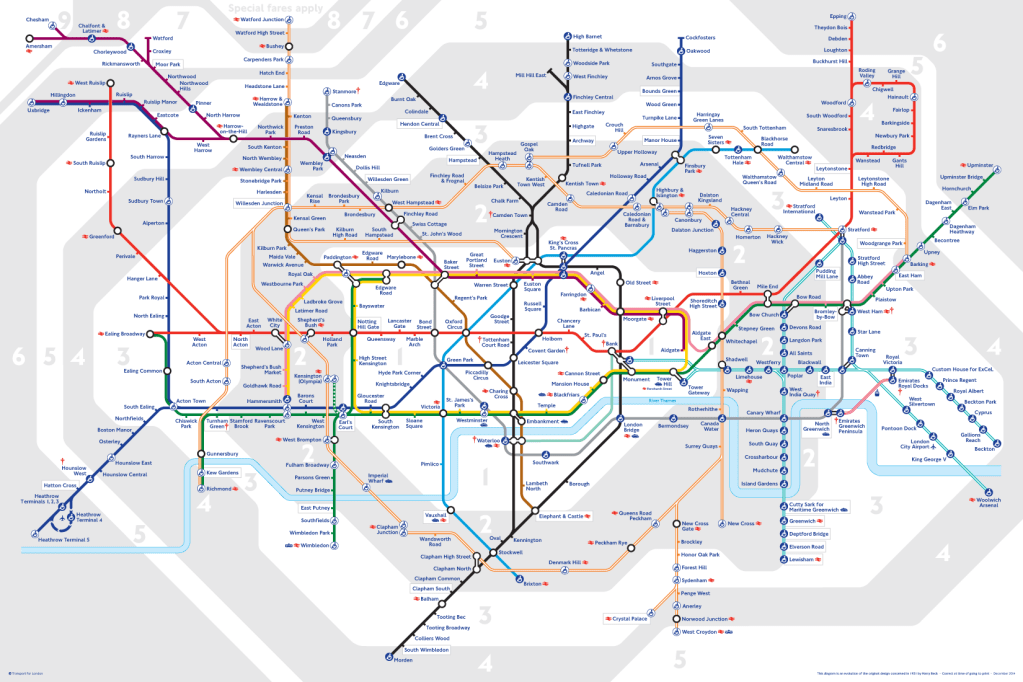
Navigating the Tube
To use the London Underground, one must familiarize themselves with the system. Here are some key tips:
- Oyster Cards and Contactless Payment: For most travelers, Oyster cards or contactless payment cards are the easiest and most cost-effective way to pay for Tube journeys. These cards are valid for travel on buses, trams, the DLR, and more.
- Zones: London is divided into zones, and the cost of your journey is determined by which zones you travel through. The central areas are within Zone 1.
- Peak and Off-Peak Times: Fares vary depending on the time of day. Peak hours are typically from 6:30 AM to 9:30 AM and from 4 PM to 7 PM on weekdays.
- Mind the Gap: The famous phrase is more than a safety warning—it’s a London Underground catchphrase. The gap between the platform and the train can be quite substantial, so be cautious when boarding.
- Planned Engineering Works: Check for planned engineering works, which can lead to line closures or service disruptions. Information is usually available on the Transport for London (TfL) website.
Discovering Hidden Gems
Beyond its role as a mode of transportation, the Tube is a gateway to a world of hidden gems. For example:
- Art on the Underground: Many stations showcase impressive public art installations, from murals to sculptures, adding cultural depth to your journey.
- Historical Stations: Some stations, like Aldwych, are no longer in use but offer tours, revealing the history of the Underground.
- Aldgate East: Here, you’ll find a remarkable piece of history—a stretch of Roman wall.
2. Buses:
- London’s iconic red buses provide a comprehensive network of routes that serve both central and suburban areas.
- Buses are useful for reaching destinations not directly accessible by the Tube.
- Oyster cards or contactless payment cards can be used for bus travel.
3. Trams:
- Tram services are available in certain parts of South London, providing another option for local transportation.
4. London Overground:
- The London Overground is a network of suburban train lines that encircle central London.
- It’s a convenient option for traveling between neighborhoods and exploring areas like East London.
A Network Unveiled
The London Overground, colloquially known as the “Ginger Line” because of its orange-colored branding, is a suburban train network that connects various neighborhoods within London. Its story is one of transformation and revitalization. Originally a collection of disconnected lines and stations, it was unified under the London Overground brand to create a more efficient and integrated system.
Lines and Routes
The London Overground consists of several key lines, including the East London Line, North London Line, South London Line, and more. These lines weave a network that spans North, South, East, and West London, providing residents and visitors with convenient transportation options between neighborhoods.
Connecting Communities
One of the notable features of the London Overground is its role in connecting neighborhoods that were once isolated. For instance, the East London Line Extension connected previously underserved areas like Dalston and Shoreditch to the city center, leading to regeneration and the development of vibrant cultural scenes.
Artistic Stations
Similar to the London Underground, the London Overground showcases public art at some of its stations. These artistic installations contribute to the character of the neighborhoods they serve. For example, the East London Line features a series of murals at stations like Whitechapel and Shadwell, enhancing the travel experience.
Accessible Travel
The London Overground has a strong focus on accessibility. Many stations are equipped with step-free access, lifts, and tactile paving, making it easier for passengers with disabilities to use the service. This emphasis on inclusivity is a significant step forward in creating a more accessible public transportation system.
Interchanges and Transfers
The London Overground seamlessly connects with other modes of transportation, including the London Underground, buses, and National Rail services. Major stations like Clapham Junction and Stratford serve as important interchange points, facilitating convenient transfers for travelers.
The Future of the Ginger Line
The London Overground network is continually evolving to meet the growing demands of London’s expanding population. Future plans include line extensions and the introduction of new stations, ensuring that the network remains a vital part of the city’s transportation infrastructure.
Exploring London’s Neighborhoods
One of the joys of traveling on the London Overground is the opportunity to explore the rich tapestry of London’s neighborhoods. From the trendy streets of Shoreditch to the scenic beauty of Crystal Palace, the London Overground offers a window into the city’s diverse and ever-changing landscape.
A Complement to the Tube
While the London Underground serves as London’s central nervous system, the London Overground acts as its circulatory system, linking communities and offering an alternative way to experience the city. It’s a transportation network that embodies the spirit of London’s constant renewal and expansion.
5. Docklands Light Railway (DLR):
- The DLR serves East London and connects to key areas, including Canary Wharf and the ExCeL London exhibition center.
The Docklands Light Railway, commonly known as the DLR, is the unsung hero of London’s public transportation network. This automated, driverless system has played a pivotal role in transforming East London’s former docklands into a hub of modern business, culture, and innovation. In this chapter, we’ll delve into the story of the DLR and its significant impact on the city.
Pioneering Automation
When the DLR was introduced in 1987, it marked a groundbreaking shift in urban transportation. The system operates without traditional train drivers, instead relying on computerized control systems. It was the first of its kind in the UK and has since inspired similar automated transit systems in cities around the world.
A Network in Transformation
The DLR’s network has evolved significantly since its inception, growing from a single line to a complex network of routes that traverse East London, connecting neighborhoods and providing access to key destinations. Notable lines include the Lewisham line, Stratford line, and the Beckton line, with interchanges at Canary Wharf, Canning Town, and Bank.
A Gateway to Development
Perhaps the DLR’s most significant impact has been its role in driving the revitalization of London’s docklands. Formerly an area of industrial decline, the DLR has helped transform this region into a thriving hub for business, finance, and culture. Canary Wharf, with its iconic skyscrapers, stands as a testament to this transformation.
Accessibility and Inclusivity
The DLR has been a leader in providing accessible public transportation. Many stations are equipped with step-free access, ramps, and tactile paving, making it easier for passengers with disabilities to navigate the system. This commitment to inclusivity reflects London’s broader efforts to create an accessible urban environment.
Serving Iconic Destinations
The DLR connects passengers to a variety of iconic destinations, including:
- Canary Wharf: London’s financial district and home to some of the city’s tallest skyscrapers.
- London City Airport: Easily accessible via the DLR, this airport caters to business travelers and international flights.
- ExCeL London: A prominent exhibition and convention center hosting a wide range of events.
Transporting the Olympic Spirit
During the 2012 London Olympics, the DLR played a vital role in transporting visitors to the Olympic Park in Stratford. Its reliability and efficiency were crucial in ensuring a smooth Olympic experience.
Looking Ahead
The DLR continues to expand and adapt to the changing needs of East London’s communities. Future projects include line extensions to areas like Barking Riverside and Thamesmead, as well as station upgrades to accommodate growing demand.
6. National Rail:
- National Rail services operate within London, providing connections to destinations outside the city.
- Major railway stations like London Paddington, London Victoria, and London King’s Cross serve both domestic and international routes.
The Backbone of UK Rail Travel
National Rail is not a single railway or network but a brand that unifies the various train operators and routes crisscrossing the UK. It plays a pivotal role in connecting London to major cities, towns, and rural areas, making it a lifeline for commuters, tourists, and travelers.
An Array of Routes
The National Rail system comprises an extensive web of routes, including intercity and commuter lines. Key routes originating from London include the West Coast Main Line, East Coast Main Line, and Great Western Main Line, each connecting the city to regions in the north, east, and west, respectively.
Central London Terminals
Several major London railway stations serve as gateways to the rest of the country. These include:
- London Paddington: Offering connections to the west, including Wales and the West Country.
- London Victoria: A key terminus for destinations in the South and Southeast, including Gatwick Airport.
- London Euston: A gateway to the West Midlands, North West England, and Scotland.
- London King’s Cross: The departure point for East Coast destinations, including Scotland.
- London Liverpool Street: Providing access to the East of England, including destinations like Cambridge and Norwich.
- London Bridge: A significant station for travel to South London, Sussex, and Kent.
Accessibility and Inclusivity
National Rail is committed to accessibility. Many stations have step-free access, lifts, and assistance services for passengers with disabilities. It’s part of the ongoing effort to ensure that train travel is inclusive and accommodating for all passengers.
Ticketing and Fares
Travelers can purchase tickets through various channels, including train stations, online platforms, and mobile apps. The rail network offers a variety of ticket options, including single, return, and season tickets. Travelcards and Railcards are available for regular commuters, offering discounts and savings on fares.
Scenic Routes and Day Trips
National Rail’s extensive network allows for countless day trips and scenic journeys across the UK. Some popular routes include:
- The Settle-Carlisle Line: A picturesque route through the Yorkshire Dales, often described as one of the most scenic in England.
- The South West Coastal Line: A journey along the stunning coast of the southwest, connecting London to Devon and Cornwall.
- The Highland Line: A route through the Scottish Highlands, offering breathtaking views of mountains and lochs.
7. London River Services:
- River services operate along the River Thames, offering scenic transportation options, particularly for some riverside attractions.
Sightseeing and Leisure
Beyond daily commuting, London River Services are a popular choice for sightseeing and leisure travel. Whether you’re a visitor exploring the city or a local looking for a different perspective, these services provide a relaxed and enjoyable way to take in London’s landmarks.
The Ultimate Thames Sightseeing Tour
A journey on the Thames Clippers presents a dynamic panorama of London’s iconic sights. From the vantage point of the river, passengers can enjoy views of:
- Tower Bridge: This architectural marvel often serves as a grand entrance to the city.
- The Shard: Western Europe’s tallest skyscraper pierces the sky, dominating the London skyline.
- The Globe Theatre: A faithful recreation of Shakespeare’s original theatre, located on the South Bank of the Thames.
- The London Eye: A giant observation wheel that offers stunning views of the city.
- Greenwich: Home to the Royal Observatory, Maritime Museum, and the historic Cutty Sark.
Connecting the City
London River Services connect the city’s key riverside areas, making it easier to explore these unique neighborhoods. Whether you want to visit the cultural hotspots of the South Bank, explore the maritime history of Greenwich, or attend events at the ExCeL London exhibition center, river travel provides a convenient link between these destinations.
An Evolving Network
The Thames Clippers have expanded their services over the years, including new routes and stops to cater to a growing number of passengers. The introduction of larger, more environmentally friendly vessels is part of ongoing efforts to enhance the experience while reducing the environmental impact.
Green and Sustainable Travel
In an age where sustainability is a growing concern, London River Services have taken steps to reduce their carbon footprint. The new generation of catamarans is designed to be more energy-efficient, with cleaner emissions and reduced noise levels.
8. Taxis:
- London’s iconic black cabs are readily available and are a convenient mode of transportation. They can be hailed on the street or booked in advance.
- Ride-sharing services like Uber are also widely available.
9. Cycling:
- London has an expanding network of cycle lanes and bike-sharing schemes, making cycling a popular and eco-friendly option for getting around.
10. Walking:
- London is a walkable city, and many attractions are within walking distance of one another, particularly in the central areas.
- Exploring on foot is a great way to discover hidden gems and local neighborhoods.
11. Cable Car:
- The Emirates Air Line cable car connects the Royal Docks and Greenwich Peninsula, offering a unique perspective of London from above.
The London Cable Car, known as the Emirates Air Line, offers a sky-high perspective on the city’s ever-evolving skyline. In this chapter, we embark on a journey above the River Thames, exploring the unique experience and breathtaking views that this aerial transportation system offers.
The Skyward Connection
The Emirates Air Line, opened in 2012, is a pioneering cable car system that provides an aerial link across the River Thames in East London. It’s not just a means of transport; it’s an attraction in its own right, offering passengers a chance to soar above the river and experience panoramic views of London.
A Scenic Route Across the Thames
The cable car route connects the Greenwich Peninsula to the Royal Docks, offering a picturesque and efficient way to cross the river. It’s particularly popular with tourists visiting the nearby O2 Arena and ExCeL London exhibition center. But beyond its practical use, it’s a thrilling way to experience the city from a unique vantage point.
Riding the Cable Car
As you board one of the cable car cabins, the anticipation builds. You’re suspended above the Thames, watching the river’s waters ripple below. The cabins are modern and spacious, with large windows that provide unobstructed views of the city.
A Panoramic View of London
As you ascend, the city unfolds below you. The Shard, Canary Wharf’s skyscrapers, and the towering office blocks of the City of London come into view. On a clear day, you can see as far as the Olympic Park and the Queen Elizabeth Olympic Park, home to the 2012 Summer Olympics.
A Gentle Breeze and a Thrilling Ride
The cable car journey is smooth and serene, offering passengers a gentle sway as they traverse the river. There’s a sense of tranquility in the air, along with a touch of excitement as you sail across the skyline. For thrill-seekers, the cable car provides a unique perspective on London’s modern architecture, riverfront neighborhoods, and expansive parks.
An Immersive Experience
The Emirates Air Line offers an immersive experience. Passengers can use interactive touch screens on board to learn more about the landmarks they’re viewing, enriching their understanding of the city. Whether you’re a history buff or simply an admirer of urban landscapes, the cable car ride has something for everyone.
Photography and Memory-Making
For photography enthusiasts, the cable car provides a remarkable platform for capturing memorable images of London. The changing light throughout the day offers an ever-evolving canvas of the cityscape.
Connecting to London’s Diverse Neighborhoods
The cable car is an integral part of London’s public transportation system. It connects two dynamic neighborhoods: Greenwich, with its historical sites and cultural treasures, and the Royal Docks, a vibrant area for business and leisure. This transportation link makes it easy for visitors to explore both regions.
12. Travelcards and Oyster Cards:
- To simplify fare payment, you can use Oyster cards or contactless payment cards (like contactless debit or credit cards) for travel on the Tube, buses, trams, the DLR, London Overground, and some National Rail services.
Oyster Card: The Everyday Companion
The Oyster Card is the quintessential choice for daily commuters and frequent travelers. It’s a contactless smart card that can be loaded with pay-as-you-go credit or season passes. Here’s how it works:
- Contactless Payment: The Oyster Card allows you to tap in and out at Tube stations, buses, trams, the DLR, London Overground, and some National Rail services.
- Pay-As-You-Go: You can load credit onto your Oyster Card and use it to travel across different modes of transportation. It automatically calculates the best fare for your journey, ensuring you don’t overpay.
- Daily and Weekly Caps: The Oyster Card has daily and weekly fare caps, meaning you won’t be charged more than a specific amount within a given time period.
- Convenience: No need to buy individual tickets; just top up your Oyster Card and use it whenever you travel.
Travelcards: Unlimited Travel for a Fixed Price
Travelcards offer another smart option, particularly for tourists and those who plan to use public transport extensively. Here’s what you need to know:
- Unlimited Travel: A Travelcard allows unlimited travel within the zones and modes of transport you select for a fixed price.
- Various Durations: You can purchase Travelcards for different durations, such as one day, one week, or longer.
- Zone Selection: The price of your Travelcard depends on the number of zones you select. Zones 1 and 2 cover central London, while additional zones extend outward.
A Winning Combination
Many visitors and residents find the Oyster Card and Travelcard a winning combination. They can use an Oyster Card for pay-as-you-go journeys within London while also enjoying the convenience of a Travelcard for unlimited travel.
Benefits of Smart Ticketing
- Cost Savings: Both Oyster Cards and Travelcards often work out cheaper than buying individual paper tickets, especially for daily commuters.
- Flexibility: With Oyster Cards, you have the flexibility to pay as you go, making it ideal for those who don’t have a fixed daily commute.
- No Need for Paper Tickets: Say goodbye to paper tickets and waiting in long queues. The smart cards make entering and exiting stations a breeze.
- Integrated Network: These cards are accepted across London’s integrated public transportation network, from the Tube to buses and trams.
- Convenience: The cards can be topped up at stations, online, or using mobile apps, making it convenient to manage your travel credit.
- Visitor Oyster Card: For tourists, there’s the Visitor Oyster Card, a variation of the Oyster Card with added benefits and discounts at various attractions.


TOP TRAVEL & FOOD ® team is made of tireless Expert Curators team to reveal “secret spots told by locals” just for you. They search for incredible destinations, dream accommodations, best flavors, memorable events and excellence services, to offer the target audience of readers and partners the greatest coverage and the best achievement of results, using the most modern technologies and expertise in the sector.



All our Review´s standards are covered with the go through careful selection for evaluation,
making a Exclusive selection list that caters to criteria used internationally. Articles and Exclusive Spot Reviews are conceptualized to transmit readers how was each experience with a brand, product or service. We cover the segments related to Tourism, Lifestyle, Gastronomy and Services, besides any others related to the city that we consider relevant for broadcast. We permanently stay connected to the ecosystem of Local Hubs. adding direct value to the Business Market.


 TOP TRAVEL & FOOD MAGAZINE