
When it comes to Christmas desserts, Italy doesn’t just celebrate, it performs a masterpiece.
From snow-dusted Alpine towns to sun-kissed southern villages, Italian Christmas sweets are deeply regional, fiercely traditional, and absolutely unforgettable.
These are not everyday desserts. They appear only once a year, tied to centuries-old rituals, family gatherings, and festive tables that stretch for hours. If you’ve ever wondered why Italian Christmas desserts are famous worldwide, this guide will take you straight to the heart of Italy’s sweetest holiday traditions.

Torrone (Northern & Southern Italy) – The Ancient Christmas Nougat
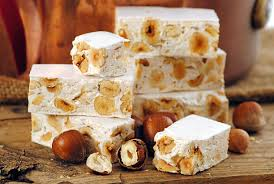
Torrone is one of the oldest Italian Christmas desserts, dating back to Roman times.
What it is
A firm or soft nougat made from:
- Honey
- Sugar
- Egg whites
- Toasted almonds or hazelnuts
Famous regional varieties
- Torrone di Cremona (Lombardy) – hard and crunchy
- Torrone di Benevento (Campania) – aromatic, often softer
- Sicilian Torrone – includes pistachios or citrus zest
Christmas tradition
Torrone is exchanged as a gift and served after meals, often broken with a small hammer — a tradition still alive today.
Recipe:
Servings: 10–12 | Total Time: 2 hours
Ingredients
- 2 egg whites
- 200g sugar
- 200g honey
- 200g toasted almonds (or a mix of almonds, hazelnuts, pistachios)
- 2 sheets of edible rice paper
Instructions
- Prepare the Pan: Line a rectangular baking pan (about 20×20 cm) with one sheet of edible rice paper, trimming it to fit the bottom perfectly.
- The Meringue: In a large bowl, beat the egg whites until stiff peaks form.
- The Syrup: In a heavy-bottomed saucepan, combine the sugar and honey. Heat over medium-low, stirring constantly, until the mixture reaches 140°C (284°F) on a candy thermometer (the “hard crack” stage).
- Combine: Slowly pour the hot honey-sugar syrup into the egg whites in a thin stream while whisking constantly. Continue to beat for about 5–10 minutes; the mixture will become very thick, white, and glossy.
- Fold: Using a sturdy spatula (grease it slightly with oil), fold in the toasted nuts and any aromatics (vanilla or zest).
- Layer: Pour the sticky mixture into the prepared pan over the first sheet of rice paper. Spread it out as evenly as possible.
- Seal: Place the second sheet of rice paper on top of the nougat. Press down firmly with your hands or a flat weight to level the torrone and ensure the paper adheres to the sticky surface.
- Set: Let it cool at room temperature in a dry place for several hours (or overnight) until completely firm.
- Cut: Use a sharp, serrated knife to cut into rectangles. The rice paper will keep your fingers clean and hold the torrone together!
Tip: Torrone makes an elegant homemade gift.

Struffoli (Naples) – The Most Festive Italian Christmas Sweet

If Christmas had a sound in Italy, it would be the clinking of honey-coated Struffoli.
What they are
Tiny fried dough balls:
- Crispy outside
- Soft inside
- Coated in warm honey
- Decorated with candied fruit and sugar sprinkles
Where they come from
Naples, Campania
Why they matter
Struffoli symbolize abundance and prosperity. The more pieces on the plate, the better the luck for the coming year. They are typically homemade and displayed proudly in the center of the Christmas table.
Recipe:
Servings: 20–25 | Total Time: 1 hour 30 min
Here is the updated Struffoli recipe. I’ve refined the instructions to include the traditional marble-sized shaping (crucial for texture) and added the classic “citrus-honey” technique used in Neapolitan kitchens.
Struffoli (Naples) – The Most Festive Italian Christmas Sweet
Recipe: Servings: 20–25 | Total Time: 1 hour 30 min
Ingredients
- 500g all-purpose flour
- 50g sugar
- 50g unsalted butter (softened)
- 3 large eggs + 1 egg yolk (for extra richness)
- 1 tsp vanilla extract
- A pinch of salt
- Zest of 1 orange and 1 lemon
- 1 tbsp Limoncello or Anisette liqueur (optional, for authentic aroma)
- Vegetable oil (like peanut or sunflower) for deep frying
- For the Coating:
- 250g honey
- 2 tbsp sugar
- Colorful “diavulin” (nonpareil sprinkles)
- Candied orange peel and cedar (citron), diced
Instructions
- Make the Dough: On a clean surface or in a bowl, mix flour, sugar, salt, and citrus zests. Make a well in the center and add eggs, yolk, softened butter, vanilla, and liqueur.
- Knead: Work the ingredients together until a smooth, compact dough forms. Wrap it in plastic and let it rest at room temperature for at least 30 minutes. This makes the dough easier to roll.
- Shape the “Chicchi”: Take a piece of dough and roll it into a long thin rope (about the thickness of your pinky finger). Cut the rope into tiny pieces about 1 cm wide.
- Tip: Do not make them too big! They puff up when frying. Authentic struffoli should be the size of small marbles.
- Fry: Heat the oil to 175°C (350°F). Fry the dough balls in small batches. They will puff up and turn golden brown very quickly (about 1–2 minutes). Remove with a slotted spoon and drain on paper towels.
- The Honey Glaze: In a large, wide pot, gently heat the honey and 2 tbsp of sugar until liquid and slightly bubbly. Turn off the heat.
- Toss: Add the fried balls and half of your candied fruit into the honey. Stir gently until every single piece is perfectly coated.
- Assemble: While still warm, pile the struffoli onto a serving plate. You can shape them into a mound or a ring (like a wreath) by placing a glass in the center of the plate and removing it once the honey sets.
- Decorate: Shower the top with the remaining candied fruit and plenty of colorful sprinkles. Let them sit for a few hours before serving so the honey thickens and the flavors meld.
Tip: Struffoli symbolize abundance — make plenty for luck!

Ricciarelli (Siena) – Italy’s Most Delicate Christmas Cookie
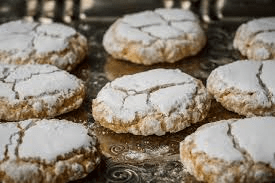
Elegant, soft, and understated, Ricciarelli are Tuscany’s contribution to Christmas sweetness.
What they are
Almond cookies made with:
- Finely ground almonds
- Sugar
- Egg whites
Finished with a light dusting of powdered sugar.
Where they come from
Siena, Tuscany
How they’re served
Traditionally paired with:
- Vin Santo
- Coffee after Christmas dinner
Their cracked surface and chewy texture are a hallmark of authentic Ricciarelli.
Recipe:
Servings: 25 cookies | Total Time: 45 min
Ingredients
- 250g finely ground almond flour (blanched)
- 200g powdered sugar (plus extra for coating)
- 2 large egg whites
- 1 tsp almond extract
- 1 tsp orange zest (optional, but highly traditional)
- ½ tsp baking powder (the secret to the “crack”)
- A pinch of salt
Instructions
- Mix Dry Ingredients: In a large bowl, sift together the almond flour, powdered sugar, baking powder, and a pinch of salt. Ensure there are no lumps.
- The Egg Whites: In a separate bowl, whisk the egg whites with the almond extract and orange zest until they are frothy and form soft peaks (they don’t need to be stiff like a meringue, just airy).
- Combine: Gently fold the dry ingredients into the egg whites. You will end up with a sticky, paste-like dough.
- The Secret Rest: Cover the bowl with plastic wrap and let the dough rest in the fridge for at least 4 to 6 hours (or overnight). This allows the almond flour to hydrate and is the secret to getting those beautiful cracks on top.
- Shape: Dust your hands and work surface with powdered sugar. Roll the dough into a log and cut into equal pieces. Shape each piece into a “pillowy” oval (traditionally called a losanga or lozenge shape).
- Coat: Roll each cookie generously in a bowl of powdered sugar until heavily coated.
- Bake: Place on a baking sheet lined with parchment paper. Pinch the tops slightly to encourage cracking. Bake at 160°C (320°F) for about 15 minutes.
Note: Do not overbake! They should still feel soft to the touch and remain white. They firm up as they cool.
Cool: Let them cool completely on the tray before moving them, as they are very fragile when hot.
Tip: Pair with Vin Santo or coffee for a traditional Tuscan dessert.
Panforte (Siena) – Medieval Christmas in One Bite
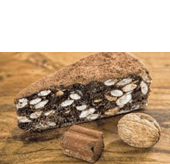
Dense, rich, and intensely spiced, Panforte is a dessert with medieval roots.
What it is
A compact cake made from:
- Nuts
- Candied fruit
- Honey
- Spices like cinnamon and nutmeg
Why it’s unique
Originally created for monks and nobility, Panforte was designed to:
- Last long
- Provide energy
- Celebrate special occasions
Today, it remains a Christmas staple in Tuscany.
Recipe:
Servings: 8–10 | Total Time: 1 hour 15 min
Ingredients
- 150g blanched almonds (whole and toasted)
- 100g hazelnuts (toasted and skins removed)
- 150g candied orange peel (diced)
- 150g candied citron (cedro) or melon (diced)
- 100g all-purpose flour
- 2 tbsp unsweetened cocoa powder (for the Panforte Nero style)
- 1 tbsp Panforte Spice Mix: 2 tsp cinnamon, 1/2 tsp nutmeg, 1/2 tsp ground cloves, 1/2 tsp ground coriander, and a pinch of black pepper (the “pepper” is why it’s called Pan-forte)
- 150g honey
- 150g granulated sugar
- Edible rice paper (optional, for the base)
- Powdered sugar for heavy dusting
Instructions
- Prep the Pan: Grease an 8-inch (20cm) springform pan. Line the bottom with edible rice paper (or parchment paper).
- Mix Dry Ingredients: In a large bowl, combine the toasted nuts, candied fruit, flour, cocoa powder, and the spice mix. Stir until the fruit and nuts are well-coated in flour.
- The Syrup (Crucial Step): In a small saucepan, combine the honey and sugar. Heat over medium heat, stirring constantly, until it reaches the “soft ball” stage (approx. 115°C / 240°F). It should be bubbly and thick but not caramel-colored.
- Combine: Quickly pour the hot syrup into the dry ingredients. Mix with a sturdy wooden spoon. Work fast! The mixture will become very stiff and difficult to stir as it cools.
- Press: Transfer the sticky mass into the prepared pan. Wet your hands or use the back of a damp spoon to press it down into a flat, even disk (usually about 2cm thick).
- Bake: Bake at 150°C (300°F) for about 30–35 minutes. Note: It will still look soft, but it shouldn’t bubble. You are drying it out more than “baking” it.
- Finish: Let it cool completely in the pan. Once cold, it will be firm and chewy. Remove from the pan, remove the parchment (leave the rice paper if using), and dust very generously with powdered sugar.
- Serve: Slice into very thin wedges—it is incredibly rich!

Cartellate (Puglia) – Southern Italy’s Christmas Flower
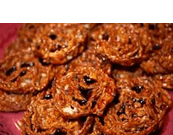
One of Italy’s most visually stunning Christmas desserts.
What they are
Thin spirals of fried dough shaped like roses, then:
- Soaked in vincotto (grape must syrup) or honey
Where they come from
Puglia
Symbolism
Their flower shape represents:
- The Nativity
- Angels’ halos
- Eternal life
They are prepared in large batches, often as a family activity.
Recipe:
Servings: 20–25 | Total Time: 2 hours
Ingredients
- 500g “00” flour (or all-purpose)
- 100ml high-quality Extra Virgin Olive Oil
- 150ml dry white wine (warmed slightly)
- 1 tbsp sugar (optional, for browning)
- Pinch of salt
- Oil for frying (Peanut or Sunflower)
For the Coating:
- 300ml Vincotto (cooked grape must) or high-quality Honey
- Ground cinnamon and toasted crushed walnuts (optional topping)
Instructions
- The Dough: On a work surface, sift the flour and salt. Create a well and pour in the olive oil and the warmed white wine. Knead for about 10 minutes until you have a smooth, elastic dough. Cover and let it rest for 30 minutes.
- Roll it Paper-Thin: Using a pasta machine (recommended) or a rolling pin, roll the dough into very thin sheets (about 1–2 mm).
- Cut & Shape: Use a fluted pastry cutter to cut strips about 3 cm wide and 25–30 cm long.
- The “Rose” Fold: Fold each strip in half lengthwise and pinch the edges together every 3–4 cm to create small “pockets.” Then, roll the strip into a spiral (like a rose), pinching the layers together as you go so the flower stays closed.
- The Secret Step (Drying): Place the shaped Cartellate on a tray and let them dry for at least 6 hours or overnight. This ensures they stay crunchy and don’t fall apart in the oil.
- Fry: Heat oil to 175°C (350°F). Fry the “roses” a few at a time until they are a light golden color (about 2–3 minutes). Drain them upside down on paper towels so the oil escapes the pockets.
- The Soak: In a wide pan, gently heat the Vincotto (or honey). Dip each fried Cartellata into the warm liquid, ensuring it fills all the little pockets.
- Finish: Arrange on a platter and sprinkle with a touch of cinnamon or crushed walnuts while the glaze is still sticky.

Updated with News & Trends
Get FREE new content delivered directly to your inbox.



 TOP TRAVEL & FOOD MAGAZINE